


This complete guide to content marketing strategies explains proven methods to grow brand awareness, attract targeted traffic, engage audiences, and increase conversions using blogs, videos, social media, email campaigns, and data-driven planning for sustainable long-term business growth.
Blog Content Strategies
Educational Blog Posts
Educational material acts as the basis for the most successful material marketing programs. These posts answer specific questions in the audience’s face, which keeps your brand as a reliable resource.
Educational blog posts work because they match how people find information online. When a person in Google “how to optimize e -post campaigns”, they are looking for actionable guidance, not a sales tone.
Be aware of creating step-by-step training programs, wide guides and problem-solving articles. Use clear titles, bullet points and examples to make your content scanned and easy.
Industry News and Analysis
Staying current with industry developments and offering your unique perspective builds authority and keeps your audience engaged. This content marketing strategy works particularly well for B2B companies and professional service providers.
Monitor industry publications, attend virtual conferences, and track trending topics in your field. Share your insights on new regulations, emerging technologies, or market shifts. Add value by explaining what these changes mean for your specific audience.
Case Studies and Success Stories
Case studies provide concrete proof that your solutions work. They combine storytelling with data, making them highly persuasive for potential customers.
Structure your case studies with a clear problem-solution-results format. Include specific metrics whenever possible. For example, “Client X increased website traffic by 45% within three months” is more compelling than “Client X saw significant growth.”
Visual Content Strategies

Infographics
Infographics transform complex information into digestible visual content. They’re highly shareable across social media platforms and can drive significant traffic back to your website.
Create infographics around industry statistics, process explanations, or comparison charts. Tools like Canva or Adobe Illustrator can help you design professional-looking graphics even without extensive design experience.
Video Content
Video content generates 1200% more shares than text and image content combined. It’s particularly effective for explaining complex concepts, showcasing products, or building personal connections with your audience.
Start with simple formats like talking-head videos or screen recordings. As you build confidence, experiment with animations, product demos, or behind-the-scenes content.
Interactive Content
Interactive content—such as quizzes, polls, calculators, or assessments—engages users more deeply than static content. It also provides valuable data about your audience’s preferences and pain points.
Create interactive content that relates directly to your products or services. A financial advisor might offer a retirement planning calculator, while a fitness coach could create a workout assessment quiz.
Social Media Content Strategies
Platform-Specific Content
Each social media platform has its own culture and content preferences. LinkedIn users expect professional insights, while Instagram audiences engage with visual storytelling.
Tailor your content format and tone to match platform expectations. Share quick tips on Twitter, professional insights on LinkedIn, and behind-the-scenes content on Instagram. Avoid posting identical content across all platforms.
User-Generated Content
User-generated content (UGC) builds community and provides authentic social proof. Encourage customers to share photos, reviews, or stories featuring your products or services.
Create branded hashtags and actively engage with users who share content about your brand. Repost high-quality UGC with proper attribution. This strategy works particularly well for consumer brands and service providers.
Read which strategy wins? Content Marketing vs Traditional Marketing
Live Streaming
Live streaming creates immediate connection and urgency. It’s perfect for Q&A sessions, product launches, or behind-the-scenes content.
Start with simple live sessions answering common customer questions. Promote your live streams in advance and save recordings for later use. Most social platforms now offer built-in live streaming capabilities.
Email Content Strategies
Newsletter Series
Email newsletters keep your brand top-of-mind and drive repeat website visits. They’re particularly effective for nurturing leads and maintaining customer relationships.
Create newsletters that provide genuine value, not just promotional content. Share industry insights, helpful tips, or exclusive content. Maintain a consistent publishing schedule to build reader expectations.
Automated Email Sequences
Automated email sequences guide prospects through your sales funnel without manual intervention. Welcome series, educational sequences, and abandoned cart reminders all fall into this category.
Map out your customer journey and create relevant content for each stage. New subscribers might receive a welcome series, while existing customers get product education or loyalty rewards.
Long-Form Content Strategies
Whitepapers and Ebooks
Long-form content demonstrates deep expertise and generates high-quality leads. These comprehensive resources work well for B2B companies and complex service providers.
Choose topics that address significant industry challenges or emerging trends. Research thoroughly and include original insights or data. Gate this content behind lead capture forms to build your email list.
Webinars and Online Events
Webinars combine education with real-time interaction. They’re excellent for demonstrating expertise, generating leads, and building relationships with prospects.
Plan webinars around topics your audience cares about. Include interactive elements like polls or Q&A sessions. Always provide actionable takeaways that attendees can implement immediately.
Content Repurposing Strategies
Multi-Format Content Creation
Transform single pieces of content into multiple formats to maximize reach and engagement. A comprehensive blog post might become a podcast episode, infographic, and social media series.
Start with one substantial piece of content, then break it down into smaller, platform-specific pieces. This approach maximizes your content creation investment while reaching different audience preferences.
Content Updates and Refreshes
Regularly updating existing content keeps it relevant and can boost search engine rankings. This strategy is particularly effective for evergreen topics that remain valuable over time.
Review your top-performing content annually. Update statistics, add new examples, or expand sections based on recent developments. Search engines favor fresh, updated content.
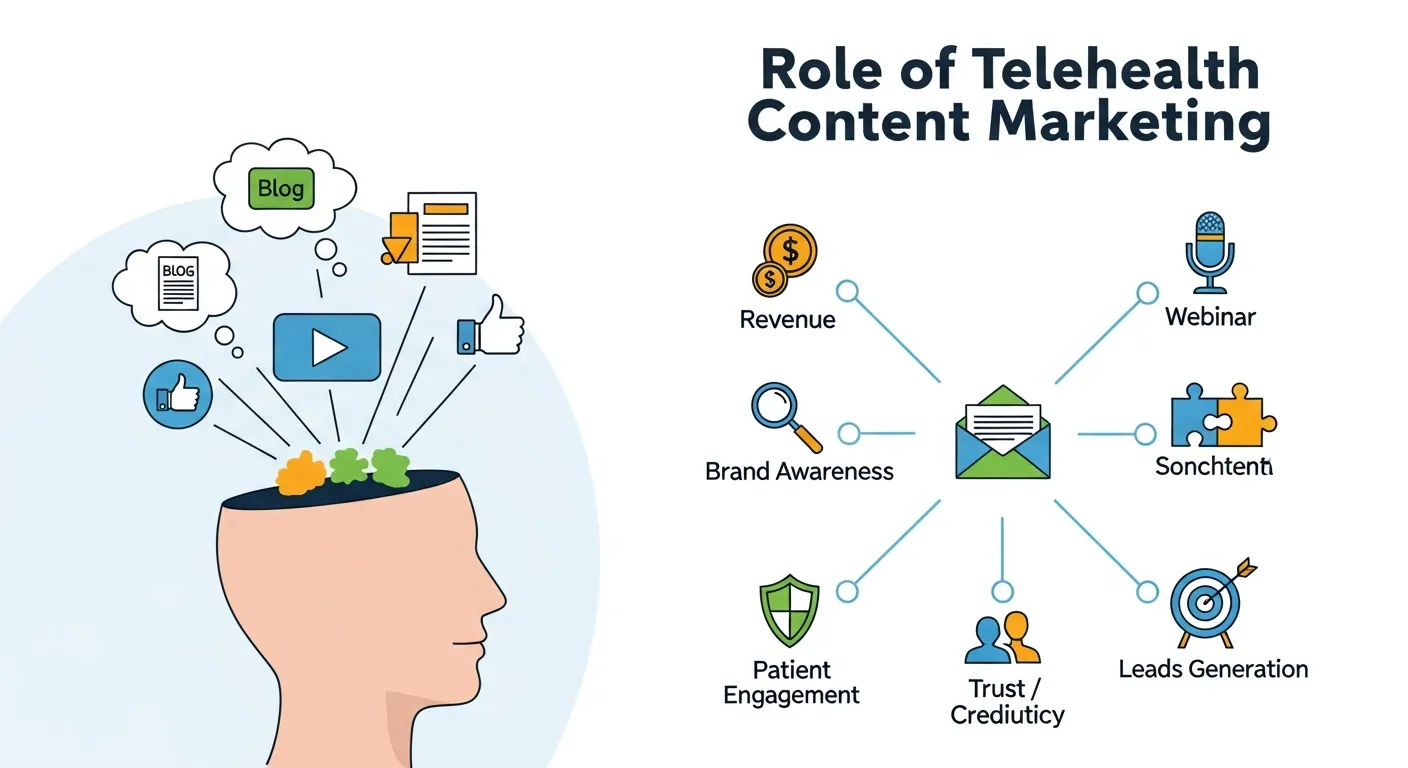
Telehealth content marketing plays a vital role in educating patients, increasing trust, and driving online consultations. By publishing informative blogs, explainer videos, and health awareness campaigns, telehealth brands can simplify complex medical concepts and build credibility. This approach improves patient engagement while supporting healthcare decision-making.
Key Benefits:
- Builds patient trust
- Increases appointment bookings
- Improves online visibility
- Enhances brand authority
| Benefit | Impact |
|---|---|
| Education | Better patient awareness |
| Trust | Higher credibility |
| SEO | Increased organic traffic |
| Engagement | Stronger patient connection |
Why Content Marketing Matters for Business Growth
Content marketing matters because it creates long-term business value. Instead of pushing ads, brands attract customers by offering useful and relevant information. This builds trust, strengthens brand authority, and improves online visibility.
Why It Matters:
- Builds brand loyalty
- Improves search rankings
- Drives organic traffic
- Increases conversions
| Factor | Business Impact |
|---|---|
| SEO | Higher rankings |
| Engagement | Better retention |
| Trust | Customer loyalty |
| Conversions | Increased sales |
Building Your Content Marketing Strategy
Choose strategies that match your resources and audience settings. A small company can focus on blog content marketing and social media, while a large company can invest in video production and webinar.
Begin with two or three strategies and perform them continuously before details. In material marketing, quality means more than quantity. It is better to create extraordinary materials in smaller formats than average content in each channel.
Track Matrix that matches your business goals. A campaign for brand awareness can focus on access and engagement, while the main generation efforts will track conversion frequency and per lead costs.
Remember that material marketing is a long -term strategy. Most companies see significant results after six months of continuous attempts. Be patient and defined your attitude depending on performance data.
Measuring Content Marketing Success
Measuring performance is essential to understand whether your content marketing strategies are delivering real business value. Without proper tracking, even the best content efforts can lose direction. Businesses should focus on both short-term engagement metrics and long-term growth indicators.
Key performance indicators (KPIs) such as website traffic, time on page, bounce rate, lead generation, conversion rate, and customer retention provide valuable insights into content effectiveness. Social engagement, email open rates, and click-through rates help evaluate audience interaction.
Using analytics tools allows marketers to identify top-performing content, optimize weak areas, and improve ROI. Regular data analysis ensures continuous improvement, helping businesses refine content marketing work and achieve sustainable growth through data-driven decisions.
Content Marketing Tools That Improve Performance
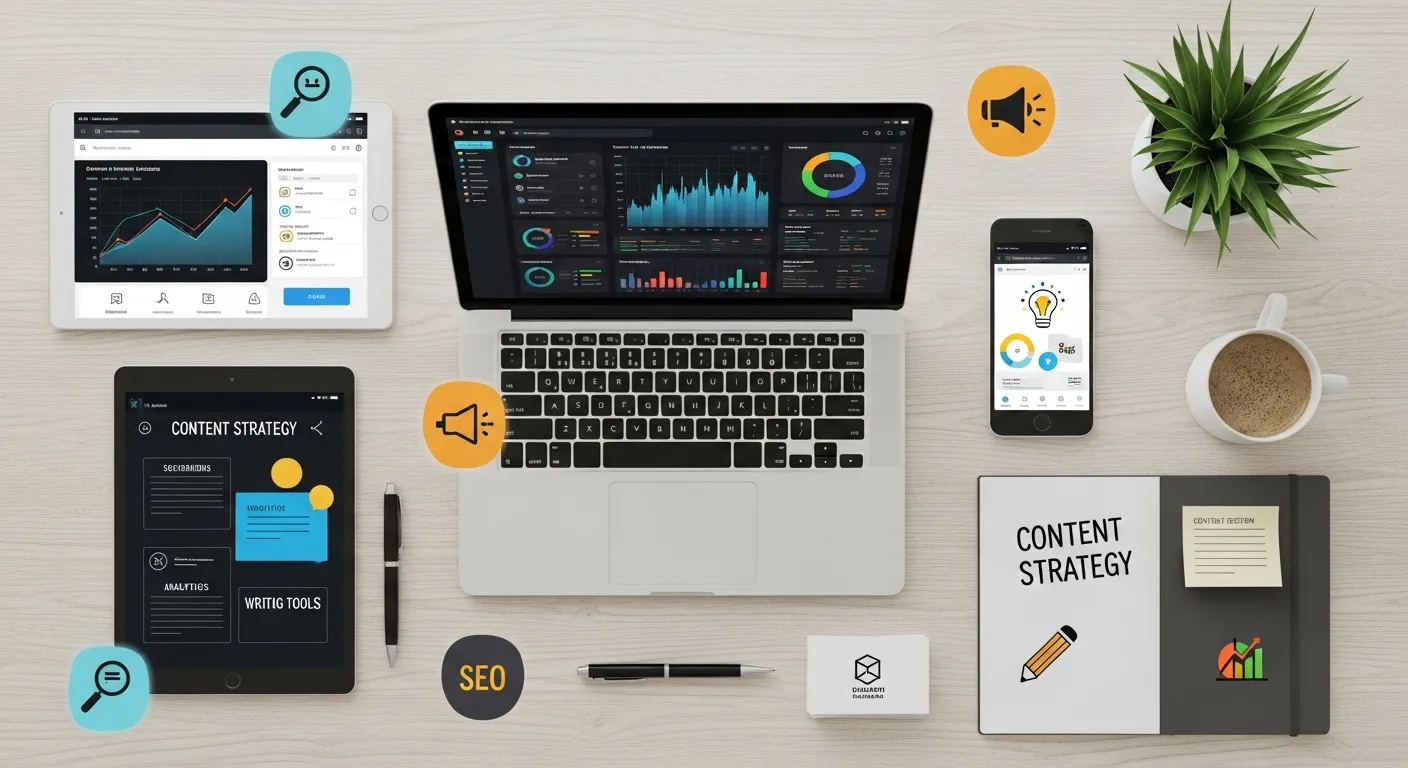
Modern content marketing strategies rely heavily on advanced tools to improve productivity, optimization, and performance tracking. These tools help businesses create high-quality content, automate publishing, manage workflows, and analyze campaign success efficiently.
SEO tools assist in keyword research, competitor analysis, and ranking tracking, ensuring better search visibility. Writing and editing tools enhance clarity, grammar, and readability. Social media scheduling platforms maintain posting consistency, while email automation tools improve lead nurturing.
Analytics dashboards provide actionable insights into user behavior and content engagement. By leveraging the right content marketing tools, businesses can scale faster, optimize campaigns, and deliver consistent value across all digital channels.
Why Content Marketing Matters for Business Growth
Content marketing matters because it builds trust, authority, and long-term customer relationships. Unlike traditional advertising, content marketing strategies focus on providing real value before promoting products, which improves brand credibility and loyalty.
By consistently publishing high-quality content, businesses attract organic traffic, nurture leads, and guide customers through the buying journey. Informative blogs, videos, and social media content improve engagement while boosting SEO performance.
Effective content marketing work helps companies stay competitive in crowded markets, reduce advertising costs, and increase conversion rates. Over time, it creates a strong digital presence that supports sustainable business growth. Brands that prioritize content marketing gain higher visibility, stronger customer connections, and long-lasting competitive advantage.
Frequently Asked Questions (FAQs)
1. What are content marketing strategies?
Content marketing strategies are structured plans for creating and distributing valuable content to attract, engage, and convert a target audience.
2. Why do content marketing strategies matter?
They help build brand trust, improve SEO visibility, increase engagement, and generate long-term business growth.
3. How does content marketing work?
It works by providing helpful information that educates, solves problems, and builds relationships with customers.
4. Which content marketing strategy is most effective?
Blogging, video marketing, and social media engagement are among the most effective strategies.
5. How long does content marketing take to show results?
Typically, 3–6 months of consistent effort.
6. What tools help content marketing success?
SEO tools, writing software, scheduling platforms, and analytics tools.
7. Is content marketing better than traditional marketing?
Yes, it offers higher engagement, lower cost, and better long-term ROI.
8. Can small businesses use content marketing?
Yes, it is cost-effective and ideal for small business growth.
9. What mistakes should be avoided?
Low-quality content, inconsistent posting, and ignoring analytics.
10. How does telehealth content marketing help healthcare brands?
It improves patient education, builds trust, and increases appointment bookings.


I’m a digital marketing expert passionate about transforming how telehealth brands connect with patients online. At Telehealth Marketing Tips, I write about the intersection of healthcare and digital strategy — from SEO and social media to patient engagement and brand growth. My goal is to help telehealth professionals thrive in the digital age with smart, data-driven marketing insights.
















No Comments