


This guide compares Content vs Traditional Marketing, explaining key differences, advantages, disadvantages, and ideal use cases. It helps businesses understand which strategy delivers better ROI, audience engagement, and long-term growth, enabling smarter marketing decisions based on budget, goals, audience behavior, and performance-driven results.
What is Traditional Marketing?
Traditional marketing includes traditional advertising methods that have been used for decades. These include TV ads, radio ads, newspapers and print ads in newspapers and magazines, direct posts, hamstring and telemarketing.
Traditional marketing usually follows one -way communication model where companies send the message to broad target groups. The primary goal is to create brand awareness and sell immediately through direct propaganda messages.
Key characteristics of traditional marketing:
- Interruptive approach: Advertisements interrupt the audience’s activity
- Broad targeting: Messages reach large, general audiences
- Push strategy: Information is pushed to consumers whether they want it or not
- Immediate focus: Emphasis on quick sales and conversions
- High production costs: Often requires significant upfront investment
What is Content Marketing?
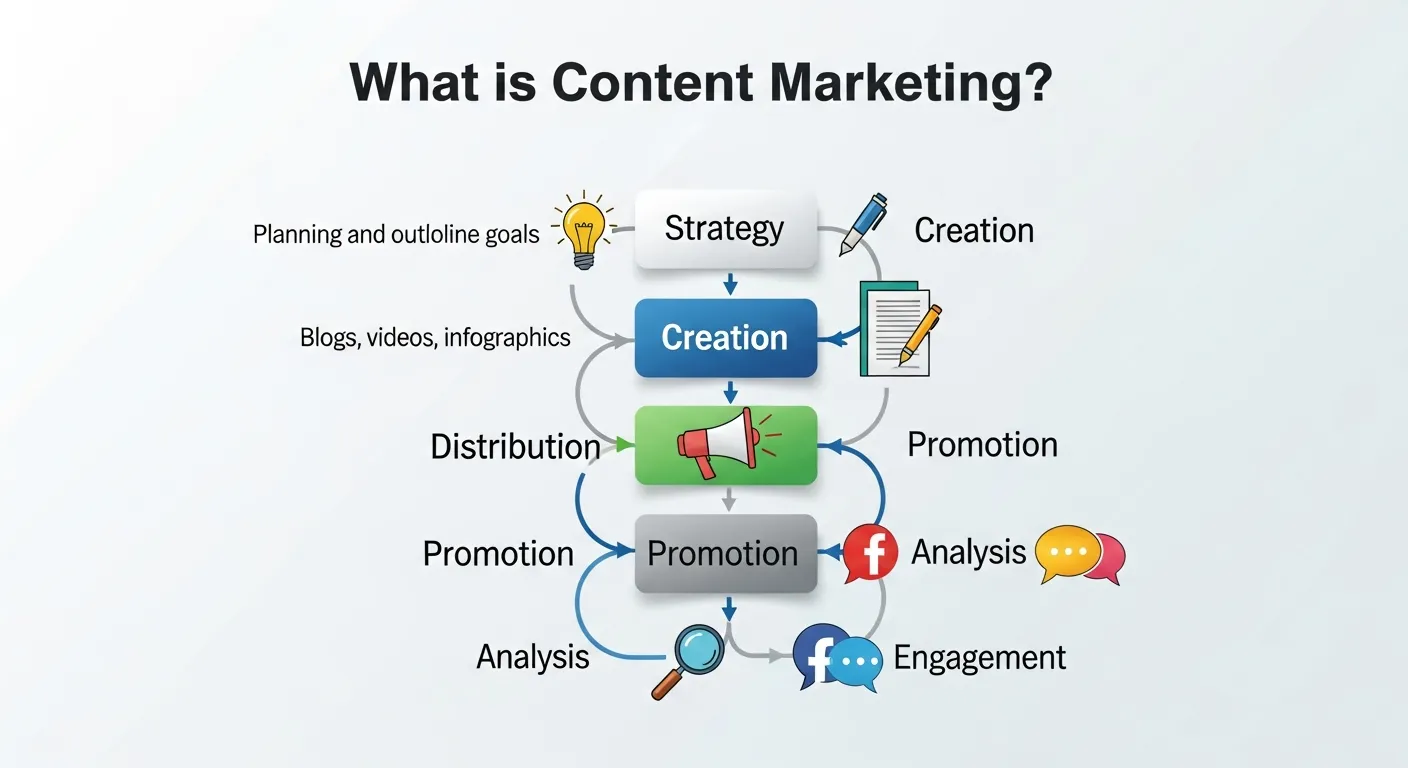
Content marketing focuses on creating and distributing valuable, relevant content to attract and engage a clearly defined audience. Instead of directly promoting products or services, content marketing aims to provide useful information that addresses audience needs and interests.
This approach builds trust and credibility over time, positioning businesses as industry experts and thought leaders. Content marketing includes blog posts, social media content, videos, podcasts, infographics, whitepapers, and email newsletters.
Key characteristics of content marketing:
- Permission-based approach: Audiences actively seek out or consent to receive content
- Targeted messaging: Content optimization is tailored to specific audience segments
- Pull strategy: Valuable content attracts consumers naturally
- Long-term focus: Builds relationships and trust over time
- Lower ongoing costs: Often more cost-effective than traditional advertising
Content Marketing vs Traditional Marketing: The Key Differences
Cost Effectiveness
Traditional marketing often requires substantial upfront investment. A single television commercial can cost thousands of dollars to produce, plus additional fees for airtime. Print advertisements, radio spots, and billboard rentals also carry significant costs.
Content marketing typically offers better cost efficiency. While creating quality content requires time and expertise, the ongoing costs are generally lower than traditional advertising. A single blog post or video can continue generating value for months or years after publication.
Audience Engagement
Traditional marketing relies on one-way communication. Businesses deliver their message, but there’s limited opportunity for audience interaction or feedback.
Content marketing encourages two-way conversations. Audiences can comment, share, and engage with content, creating opportunities for businesses to build relationships and gather valuable feedback.
Measurability and Analytics
Traditional marketing measurement can be challenging. While you can track some metrics like circulation numbers or viewership, it’s difficult to measure direct impact on sales or determine which specific advertisements drive conversions.
Content marketing offers detailed analytics and measurable results. You can track website traffic, engagement rates, conversion paths, and return on investment with precision. This data helps optimize future campaigns and demonstrate clear business value.
Longevity and Shelf Life
Traditional advertisements have limited lifespans. A magazine ad is relevant only during that publication’s circulation period. Radio and television commercials air for specific timeframes then disappear.
Content marketing assets can provide value indefinitely. A well-written blog post or helpful video can continue attracting and engaging audiences for years, creating compound returns on your initial investment.
Read this blog for knowing about Why Content Marketing Is Your Business’s Secret Weapon
Performance Comparison – Content Marketing vs Traditional Marketing
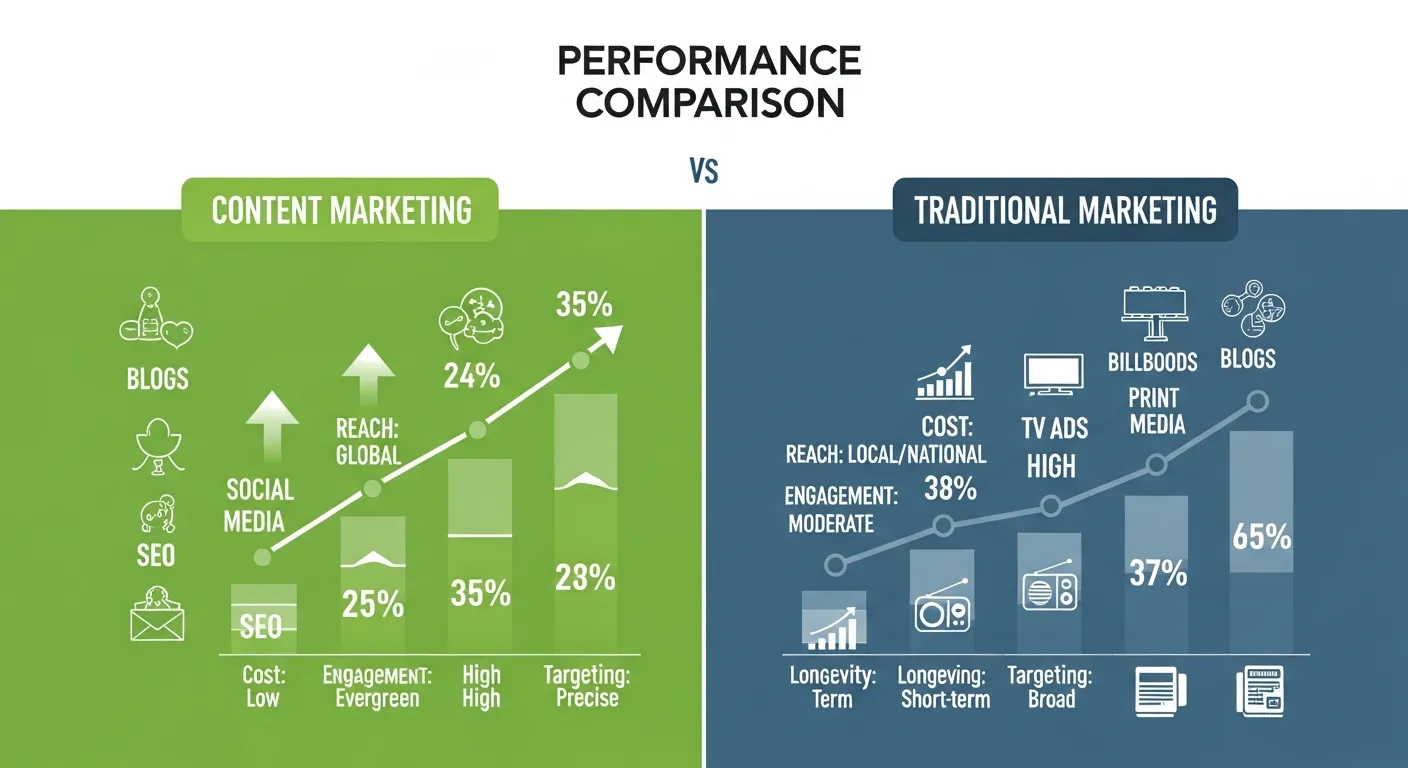
Understanding real-world performance differences helps businesses choose the most effective marketing approach. While traditional marketing offers quick exposure, content marketing delivers sustainable growth, stronger engagement, and long-term ROI. Businesses today increasingly prefer content marketing because it builds trust, generates organic traffic, and nurtures customer relationships over time.
Key Performance Factors:
- Lead generation capability
- Conversion rate
- Brand trust & loyalty
- Cost per acquisition
- Long-term ROI
Performance Comparison Table
| Factor | Content Marketing | Traditional Marketing |
|---|---|---|
| Lead Quality | High-intent leads | Mixed-quality leads |
| Cost per Lead | Low | High |
| Conversion Rate | High | Medium |
| Trust Building | Strong | Moderate |
| Long-Term ROI | Very High | Low |
| Scalability | Easy to scale | Expensive to scale |
Advantages of Traditional Marketing
Broad Reach and Mass Exposure
Traditional marketing excels at reaching large audiences quickly. Television commercials during popular shows, radio ads during drive time, and prominent billboard locations can expose your brand to thousands or millions of people simultaneously.
Established Trust and Credibility
Many consumers still view traditional advertising as more legitimate and trustworthy. Seeing a company’s advertisement in a reputable newspaper or on television can enhance brand credibility and consumer confidence.
Immediate Impact
Traditional marketing can drive quick results. A well-timed radio commercial or direct mail campaign can generate immediate sales spikes, making it valuable for product launches or time-sensitive promotions.
Less Competition for Attention
While traditional media costs more, there’s often less competition for audience attention compared to digital channels. Your television commercial won’t compete with hundreds of other ads simultaneously like social media posts do.
Advantages of Content Marketing
Cost-Effective Long-Term Strategy
Content marketing typically delivers better return on investment over time. While traditional advertising costs recur each time you want to reach audiences, content continues working long after creation.
Builds Genuine Relationships
Content marketing helps establish authentic connections with audiences. By providing valuable information and insights, businesses can build trust and loyalty that leads to long-term customer relationships.
Improved SEO and Online Visibility
Quality content improves search engine rankings, helping potential customers find your business organically. This organic discovery is often more valuable than paid advertising because it indicates genuine interest.
Precise Targeting and Personalization
Content marketing allows detailed audience segmentation and personalized messaging. You can create specific content for different customer personas, addressing their unique needs and preferences.
Valuable Customer Insights
Content marketing generates rich data about customer behavior, preferences, and interests. This information helps improve products, services, and future marketing efforts.
Disadvantages of Traditional Marketing
High Costs and Limited Flexibility
Traditional marketing requires significant financial investment with limited ability to adjust campaigns once they’re live. If an advertisement isn’t performing well, you’ve already committed to the full cost.
Difficult to Target Precisely
Traditional marketing often involves substantial waste reach—paying to show your message to people who aren’t potential customers. This inefficiency reduces overall campaign effectiveness.
Declining Effectiveness
Consumer behavior has shifted dramatically. Many people skip television commercials, ignore print advertisements, and use ad blockers online. Traditional marketing interruption tactics are becoming less effective.
Limited Measurement Capabilities
It’s challenging to track traditional marketing performance accurately. Without clear attribution, it’s difficult to determine which campaigns drive results or optimize for better performance.
Disadvantages of Content Marketing
Time-Intensive Process
Content marketing requires significant time investment. Creating quality content, building audience engagement, and seeing substantial results can take months or years.
Requires Specialized Skills
Effective content marketing demands expertise in writing, design, SEO, social media, and analytics. Many businesses need to hire specialists or invest in training existing staff.
Slow to Show Results
Unlike traditional advertising’s immediate impact, content marketing builds momentum gradually. This slower pace can be challenging for businesses needing quick results.
Ongoing Commitment Required
Content marketing isn’t a one-time effort. It requires consistent publishing, engagement, and optimization to maintain effectiveness. This ongoing commitment can strain resources.
When to Use Content vs Traditional Marketing
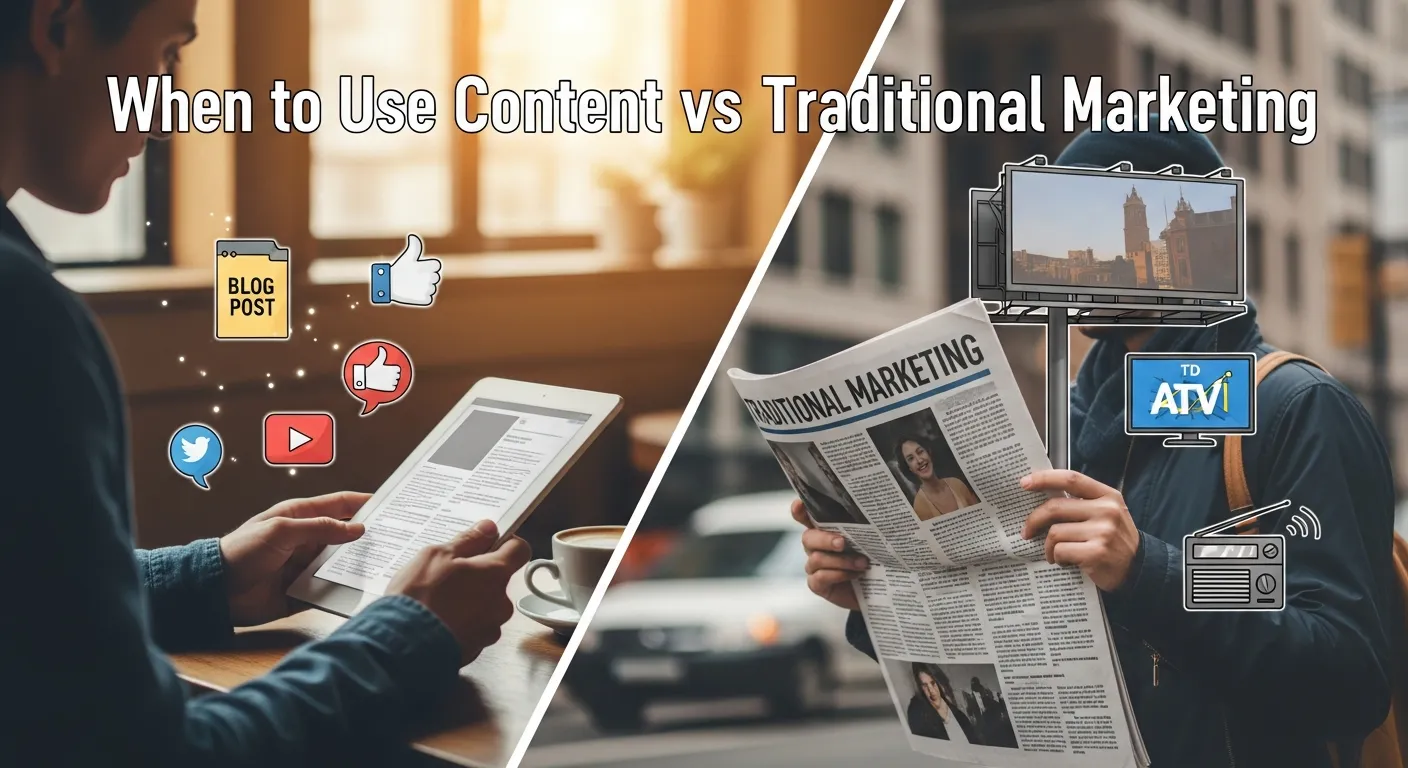
Both marketing strategies can deliver powerful results when applied in the right situation. Understanding when to use content marketing or traditional marketing helps businesses maximize impact, optimize spending, and improve customer engagement.
Content marketing works best for long-term brand growth, organic traffic, and trust-building. Traditional marketing is ideal for fast awareness, local exposure, and time-sensitive promotions.
When to Choose Content Marketing:
- Long-term growth strategy
- Budget-conscious marketing plans
- SEO-driven brand building
- Thought leadership development
- Digital-first audience targeting
When to Choose Traditional Marketing:
- Product launches
- Flash sales & promotions
- Local business advertising
- Brand visibility campaigns
- Mass audience targeting
Strategic Use Case Table
| Business Goal | Best Strategy |
|---|---|
| Long-term growth | Content Marketing |
| Quick brand exposure | Traditional Marketing |
| SEO improvement | Content Marketing |
| Product launch | Traditional Marketing |
| Customer trust building | Content Marketing |
| Local advertising | Traditional Marketing |
Which Strategy Should You Choose?
The choice between content marketing and traditional marketing depends on several factors:
Consider Your Budget
If you have limited marketing budget, content marketing often provides better value. However, if you have substantial resources and need immediate results, traditional marketing might be appropriate.
Evaluate Your Timeline
Traditional marketing works well for short-term campaigns and immediate needs. Content marketing is better for long-term brand building and sustainable growth.
Assess Your Audience
Research where your target audience spends their time and how they prefer to receive information. Younger demographics often favor digital content, while older audiences may respond better to traditional media.
Define Your Goals
If your primary goal is brand awareness and immediate sales, traditional marketing might be effective. If you want to build relationships, establish expertise, and create lasting value, content marketing is likely better.
Creating an Integrated Marketing Approach
Especially instead of choosing a strategy, many successful businesses link both attitudes strategically. Traditional marketing can cause extensive risk and immediate effect, while material marketing produces long -term conditions and permanent growth.
For example, you can use traditional ads to announce a new product launch, and then support it with material marketing that educates the audience about the benefits and use of the product. This integrated approach benefits from the strength of both strategies and reduces their individual weaknesses.
Making the Right Choice for Your Business

The most effective marketing strategy depends on your specific business references, goals and resources. Material marketing provides durable, cost -effective growth capacity, while traditional marketing provides immediate access and installed reliability.
Consider starting with a small investment in material marketing to test the efficiency of your business. Track the results carefully and gradually increase your investment when you see positive returns. You can always complement traditional marketing for specific campaigns or urgent needs.
Success with marketing comes from measuring the results to understanding the audience, providing constant value and to improving your attitude continuously. Whether you choose a combination of material marketing, traditional marketing or both, focusing on making meaningful connections with the audience and providing real value.
Frequently Asked Questions (FAQ)
1. What is the main difference between content marketing and traditional marketing?
Content marketing focuses on educating and engaging audiences, while traditional marketing focuses on direct advertising and promotion.
2. Which strategy offers better ROI?
Content marketing generally offers higher ROI due to long-term traffic, lower cost per lead, and consistent engagement.
3. Is content marketing better than traditional marketing?
For long-term growth, SEO, and trust-building, content marketing performs better. Traditional marketing is better for short-term promotions.
4. Can businesses combine both strategies?
Yes, combining both strategies creates a balanced marketing approach for maximum reach and impact.
5. How long does content marketing take to show results?
Typically, content marketing shows strong results within 3–6 months depending on consistency and SEO efforts.
6. Is traditional marketing still effective?
Yes, especially for local businesses, brand launches, and time-sensitive campaigns.
7. Which strategy is better for small businesses?
Content marketing is more cost-effective and scalable, making it ideal for small businesses.
8. Does content marketing improve SEO?
Yes, high-quality content significantly improves search rankings and organic traffic.
9. Is social media part of content marketing?
Yes, social media plays a vital role in distributing and amplifying content marketing efforts.
10. Which strategy builds more customer trust?
Content marketing builds stronger trust through valuable, educational, and helpful content.


I’m a digital marketing expert passionate about transforming how telehealth brands connect with patients online. At Telehealth Marketing Tips, I write about the intersection of healthcare and digital strategy — from SEO and social media to patient engagement and brand growth. My goal is to help telehealth professionals thrive in the digital age with smart, data-driven marketing insights.
















No Comments