


In this comprehensive guide, we will explore how AI chatbots can elevate your telehealth marketing strategy. You will learn about the evolving marketplace, the technical foundations of AI-driven conversational agents, and the tangible benefits they deliver—from 24/7 patient engagement to actionable insights. We will also provide step-by-step implementation advice, proven best practices, and key performance indicators to track return on investment. External resources from HealthIT.gov and NIH underscore the importance of secure, compliant deployments. Whether you are launching your first chatbot initiative or optimizing an existing solution, this article offers actionable recommendations to boost lead generation, lower no-show rates, and enhance patient satisfaction. Read on to discover how AI chatbots can transform how you market telehealth services and help your practice thrive in today’s competitive environment.
The Evolving Telehealth Marketing Landscape
Telehealth has undergone a remarkable transformation, driven by technological advancements and shifting patient expectations. Today, consumers demand fast, convenient access to care without sacrificing quality or personal attention. As a result, competition among clinics, hospitals, and private practices has intensified. Traditional tactics—email newsletters, paid search campaigns, and social media ads—can generate awareness but often fail to capture qualified leads or sustain engagement beyond a single interaction.
Moreover, healthcare organizations must address challenges such as:
- Standing out in an overcrowded digital marketplace
- Delivering personalized experiences while maintaining compliance with regulatory requirements (HIPAA, GDPR)
- Mitigating appointment no-shows and abandoned booking processes
- Collecting actionable data to refine marketing strategies
In today’s digital landscape, integrating AI chatbots into your telehealth marketing approach offers a powerful solution to these obstacles. Chatbots engage patients around the clock, respond to inquiries instantly, and guide users through decision points. Whether a visitor wants to learn about coverage options or schedule a follow-up consultation, AI chatbots can manage routine tasks and surface high-intent prospects for your clinical or sales team. As telehealth adoption continues to grow this year, organizations that embrace intelligent automation will gain a competitive edge by meeting patient expectations for instant, personalized support. By analyzing interaction data, you can continuously improve messaging, identify common pain points, and fine-tune your overall marketing funnel.
The Anatomy of AI Chatbots in Healthcare
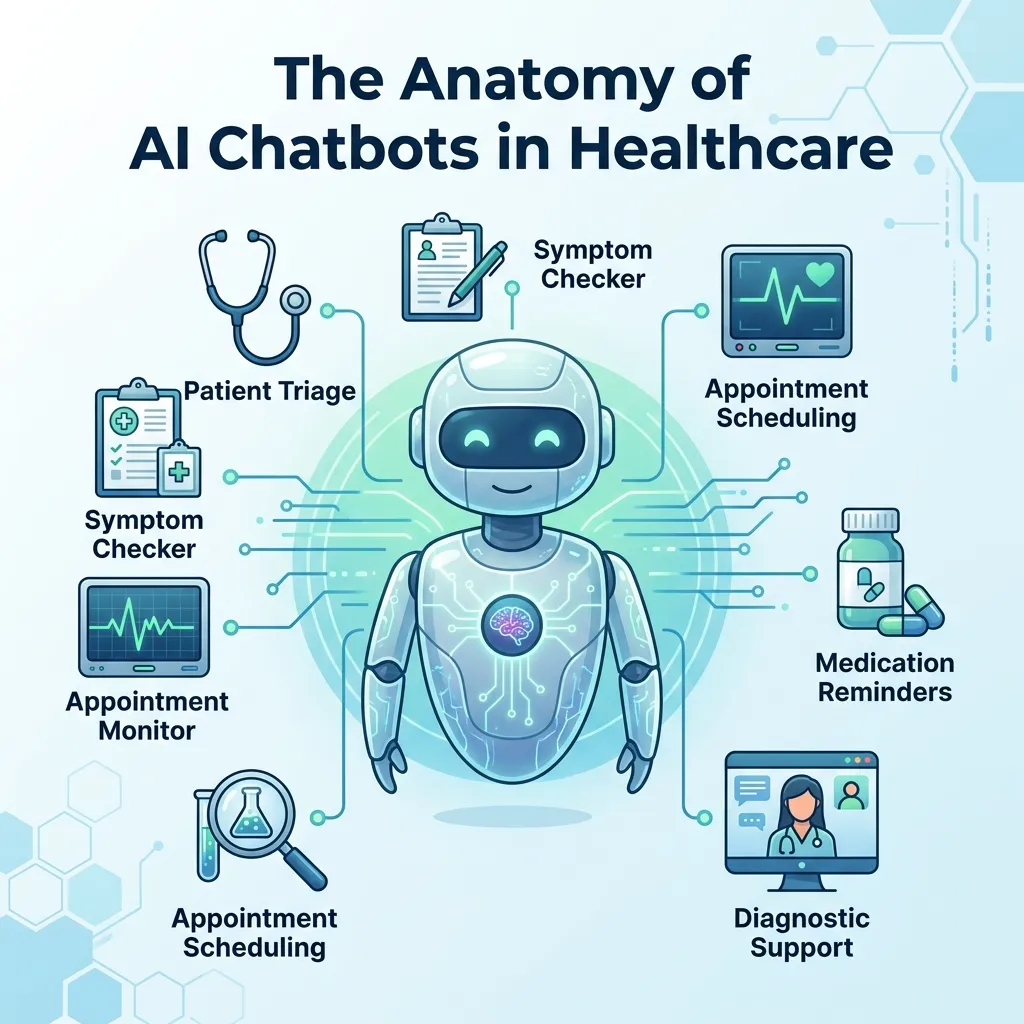
Understanding how AI chatbots operate is essential to unlocking their full potential. At their core, these conversational agents rely on several key components:
- Natural Language Processing (NLP): NLP engines parse user inputs, detect intent, and extract relevant entities—symptoms, insurance details, or preferred appointment times. Modern NLP leverages deep learning models that adapt and improve over time.
- Knowledge Base: A centralized repository houses service descriptions, policy information, billing guidelines, and other content. This database ensures that responses remain accurate and consistent, even as offerings evolve.
- Integration Layer: Secure connectors bridge the chatbot with your electronic health record (EHR), customer relationship management (CRM) software, and scheduling platforms. This interoperability allows automated lead qualification, appointment booking, and data synchronization in real time.
- Analytics & Reporting: Robust dashboards track conversation volume, resolution rates, lead qualifications, and patient sentiment. By analyzing these metrics, marketers and administrators can identify bottlenecks and optimize flows for higher conversion rates.
When these elements work together, AI chatbots become more than simple Q&A tools. They transform into intelligent marketing assistants that guide each visitor down the funnel—from initial awareness to actual appointment confirmation. For instance, a chatbot embedded on your website can greet first-time visitors, offer relevant educational materials, and invite them to schedule a telehealth consultation. On social channels or messaging platforms like Facebook Messenger, it can answer frequently asked questions about insurance coverage or recommended follow-up treatments. By centralizing conversational logic and integrating securely with clinical systems, AI chatbots ensure a consistent, compliant experience that scales effortlessly as your telehealth practice grows.
Core Advantages of AI Chatbots in Telehealth Marketing
Implementing AI chatbots can unlock multiple benefits that resonate across marketing, operations, and patient satisfaction:
- 24/7 Patient Engagement: Chatbots never rest. They address inquiries about symptoms, insurance eligibility, or appointment availability in real time, reducing the risk of losing prospects to competitors.
- Automated Lead Qualification: By asking targeted questions regarding medical needs, location, and coverage, chatbots filter out low-intent visitors and direct high-potential leads to your healthcare team.
- Personalized Recommendations: Leveraging historical interaction data, chatbots suggest tailored care pathways, educational resources, or follow-up telehealth visits, fostering a patient-centric journey.
- Operational Cost Savings: Automating repetitive tasks—answering FAQs or scheduling appointments—reduces administrative phone volume and staff workload, allowing employees to focus on complex cases.
- Lowered No-Show Rates: Automated reminders, confirmation prompts, and rescheduling options lead to significant drops in missed appointments, enhancing revenue stability.
- Actionable Insights: Detailed conversation logs reveal trending concerns, common questions, and funnel drop-off points. These analytics empower your marketing team to refine campaigns and messaging for better ROI.
Collectively, these advantages enable healthcare practices to build stronger relationships with patients, increase booking volumes, and reduce overhead. In today’s competitive environment, offering prompt, personalized support through AI chatbots can be the differentiator that drives growth. Organizations that fail to leverage this technology risk falling behind peers who can meet and exceed patient expectations instantly and at scale.
Practical Steps to Deploy AI Chatbots Successfully

Rolling out a chatbot initiative requires thoughtful planning and execution. Consider the following tactical steps to ensure a seamless launch:
Define Objectives and Use Cases
Begin by pinpointing your primary goals—be it generating qualified leads, streamlining appointment scheduling, educating patients, or automating prescription renewals. Map each use case to specific decision points in the patient journey to maintain clarity.
Choose a Compliant Platform
Select a chatbot solution with strong NLP capabilities, intuitive bot-building interfaces, and healthcare compliance certifications (HIPAA, HITRUST). Verify that security protocols—encryption, role-based access, audit logging—align with your organization’s privacy policies.
Design Intuitive Conversation Flows
Develop dialog trees that guide users logically from greeting to resolution. Incorporate quick-reply buttons for common questions, fallback messages for unrecognized inputs, and triggers for human handoffs when issues surpass the bot’s scope.
Integrate with Core Systems
Connect your chatbot to your CRM, EHR, and scheduling tools to enable seamless data exchange. Rigorous end-to-end testing is vital to confirm accurate data capture, proper routing of leads, and adherence to security standards.
Train and Validate the Bot
Populate your knowledge base with real-world transcripts, FAQs, and policy documents. Conduct pilot trials with staff members and a small cohort of patients, gather their feedback, and refine conversation scripts before wide release.
Launch, Promote, and Monitor
Deploy your chatbot across website pages, mobile apps, and social channels. Announce the feature through email campaigns and blog updates to drive adoption. Monitor key metrics—conversation volume, resolution rate, lead conversions—using dashboards to identify improvement opportunities.
Following these steps provides a structured roadmap to launch AI chatbots that meet patient needs and align with organizational objectives. Iterative testing and stakeholder involvement are critical to ensuring a positive user experience and sustained engagement.
Optimizing Performance and Measuring Impact

Launching your AI chatbot is only the beginning. To maximize value, adopt an iterative approach focused on continuous improvement and data-driven decision-making. Key performance indicators (KPIs) to track include:
- Conversation Volume: Tracks overall interactions to gauge user adoption and outreach effectiveness.
- Resolution Rate: Measures the percentage of inquiries resolved without human intervention, indicating the bot’s accuracy and coverage.
- Qualified Leads Generated: Reflects the number of interactions that convert into booked appointments or consultations.
- No-Show Reduction: Monitors changes in appointment attendance after automated reminders and confirmations.
- Patient Satisfaction Scores: Captured via post-chat surveys or sentiment analysis to assess user experience quality.
- Cost Savings: Calculated from reductions in phone handling, administrative hours, and overall operational expenses.
Complement these quantitative metrics with qualitative insights from user feedback. Regularly review chat transcripts to identify confusing prompts, outdated content, or broken flows. Update your knowledge base when clinical guidelines or insurance policies change. Prioritize conversational tone—ensure the language remains empathetic, clear, and patient-centric.
Finally, benchmark chatbot performance against industry standards and case studies, such as those published by academic institutions or government research bodies. By aligning your metrics with recognized best practices, you can validate the ROI of your AI chatbot initiative and secure executive buy-in for future enhancements.
Conclusion
AI chatbots have emerged as indispensable assets for telehealth marketing. By automating routine tasks, qualifying leads, and personalizing patient journeys, conversational agents help healthcare practices differentiate themselves in a crowded market. A well-planned deployment—anchored by clear objectives, robust integrations, and ongoing optimization—delivers measurable gains in engagement, operational efficiency, and patient satisfaction.
As telehealth continues to evolve, organizations that leverage AI chatbots will enjoy a competitive advantage, capturing more leads, reducing no-shows, and building stronger patient relationships. Begin by mapping your key use cases, selecting a compliant platform, and designing intuitive conversation flows. Then measure impact through focused KPIs and iterate based on data and feedback. Embrace the power of AI chatbots to elevate your telehealth marketing strategy and achieve sustained growth in today’s dynamic healthcare environment.
FAQs


I’m a telehealth marketing enthusiast dedicated to bridging the gap between healthcare and digital innovation. Through Telehealth Marketing Tips, I share practical strategies on SEO, content marketing, and patient outreach to help telemedicine brands stand out and grow. My mission is to make digital marketing simple, effective, and impactful for the healthcare industry.
















No Comments