

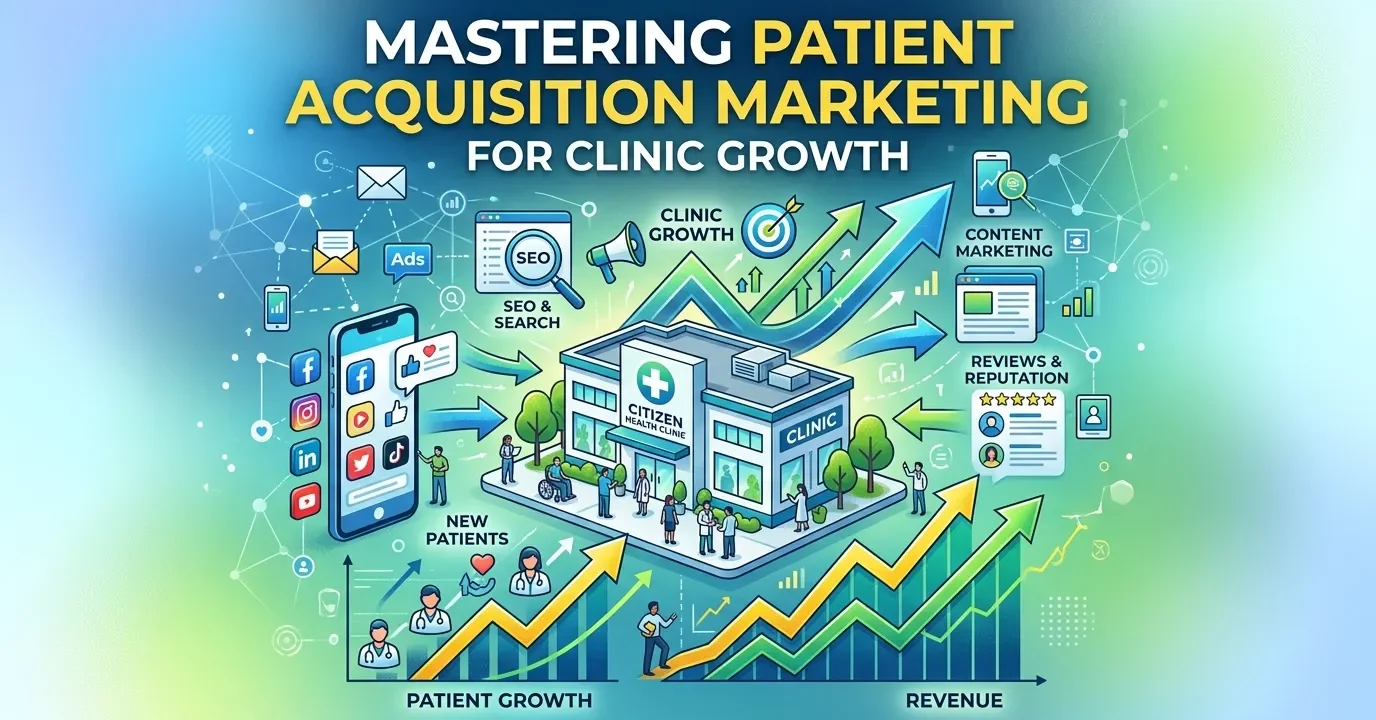
This comprehensive guide explains how to build a successful healthcare marketing engine. You will discover actionable SEO techniques, paid advertising tips, and patient retention strategies. Learn how to optimize your digital presence, avoid common industry pitfalls, and sustainably scale your medical practice.

Patient acquisition marketing refers to the strategic process healthcare providers use to attract new patients to their practice. This involves a mix of digital and traditional marketing efforts designed to build trust, showcase medical expertise, and make it easy for potential patients to book appointments.
Unlike standard retail marketing, healthcare marketing requires strict adherence to privacy regulations while simultaneously demonstrating empathy and authority.
Core Pillars of a Patient Acquisition Marketing Strategy
Building a robust acquisition pipeline requires a multi-channel approach.
Optimizing Your Healthcare Website
Your website is the digital front door to your practice. Potential patients will judge your credibility based on site speed, mobile responsiveness, and intuitive navigation. Ensure your contact information and booking portals are highly visible.
Leveraging Local SEO

When someone needs medical care, they turn to search engines. Optimizing your Google Business Profile is critical for capturing local search traffic. Ensure your practice name, address, and phone number (NAP) are consistent across all online directories.
Implementing Paid Advertising (PPC)
Pay-per-click advertising allows you to target specific medical keywords in your geographic area. When executing PPC campaigns, always ensure your landing pages are strictly HIPAA compliant to protect patient privacy and maintain trust.
Establishing a Content Marketing Strategy
Creating educational content builds your authority. By answering common health questions on your blog, you naturally improve your search engine rankings. A strong content marketing strategy establishes your medical team as trusted thought leaders in the community.
Comparison: Traditional vs. Digital Patient Acquisition
Understanding the shift in how patients find doctors helps allocate your marketing budget effectively.
|
Feature |
Traditional Marketing (Print, TV, Radio) |
Digital Marketing (SEO, PPC, Social) |
|---|---|---|
|
Targeting |
Broad and generalized |
Highly specific (location, intent, demographics) |
|
Cost Tracking |
Difficult to measure ROI |
Precise tracking and analytics |
|
Engagement |
One-way communication |
Interactive (reviews, social media, messaging) |
|
Speed to Lead |
Slow |
Immediate appointment booking |
Common Mistakes in Patient Acquisition Marketing
Even experienced clinics stumble when building their marketing funnels. Avoid these frequent missteps:
- Ignoring Online Reviews: Patients trust online reviews as much as personal recommendations. Failing to respond to reviews damages your reputation.
- Complicated Booking Processes: If a patient has to click through five pages to book an appointment, they will leave. Implement a streamlined healthcare CRM to manage bookings efficiently.
- Inconsistent Branding: Your messaging should remain uniform across your website, social channels, and physical office.
- Neglecting Mobile Users: Over half of all medical searches occur on mobile devices. A non-responsive website immediately drives potential patients to competitors.
Pro Tips for Maximizing Clinic ROI

To truly excel, consider integrating advanced tactics into your marketing ecosystem.
Promote your telehealth services prominently. Patients increasingly value the convenience of virtual consultations. Highlight these offerings on your homepage and within your advertising copy.
Additionally, establish a strong patient feedback loop. After every appointment, send automated surveys to gather insights. Use this data to refine your clinic’s operations and feature positive testimonials in your promotional materials.
How Data Drives Patient Acquisition Marketing Success
Successful healthcare growth relies on data analysis. Track metrics such as cost-per-acquisition (CPA), website conversion rates, and patient lifetime value. Utilizing analytics platforms like Google Analytics helps identify which marketing channels generate the highest quality appointments.
By continuously monitoring these metrics, practice managers can pivot their strategies, pausing underperforming ads and scaling successful local SEO initiatives.
Growing Your Practice Sustainably
Executing effective patient acquisition marketing transforms how clinics connect with their community. By applying these digital strategies, optimizing your online presence, and prioritizing the patient experience, your healthcare facility will thrive. Ready to elevate your clinic’s growth? Contact our experts today to build your custom marketing roadmap.
FAQs
1. What is the most effective channel for patient acquisition marketing?
Search engine optimization (SEO) and paid search (PPC) are typically the most effective channels. They capture high-intent users who are actively searching for medical services in their immediate geographic area.
2. How long does it take to see results from healthcare SEO?
SEO is a long-term strategy. Most clinics begin seeing noticeable improvements in organic traffic and appointment bookings within four to six months of consistent optimization.
3. Why are patient reviews so important for acquisition?
Reviews serve as digital word-of-mouth. The vast majority of prospective patients read online reviews to evaluate a provider’s bedside manner, wait times, and overall competence before booking an appointment.
4. How can I ensure my marketing remains HIPAA compliant?
Never use patient identifiers in your marketing without explicit written consent. Ensure all digital forms, CRM tools, and communication platforms feature end-to-end encryption and have signed Business Associate Agreements (BAAs).
5. Should my practice use social media for marketing?
Yes. Social media platforms are excellent for building community awareness, sharing health tips, and humanizing your staff. However, they are generally better for brand awareness than direct patient acquisition.
6. What role does website speed play in patient acquisition marketing?
A slow website frustrates users and leads to high bounce rates. Search engines also penalize slow-loading sites, which drastically lowers your visibility in local search results.
7. How do I calculate my patient acquisition cost (PAC)?
Divide your total marketing and sales expenses over a specific period by the number of new patients acquired during that same timeframe.
8. Is telehealth a useful tool for acquiring new patients?
Absolutely. Offering virtual visits expands your geographic reach and attracts patients who prioritize convenience, busy professionals, and those with mobility issues.
9. How often should we update our medical blog?
Aim to publish high-quality, medically accurate articles at least twice a month. Consistency signals to search engines that your site is active and authoritative.
10. Do I need a dedicated agency for patient acquisition marketing?
While small practices might manage basic local SEO internally, partnering with a specialized healthcare marketing agency ensures regulatory compliance, faster results, and higher return on investment.


I’m a digital marketing expert passionate about transforming how telehealth brands connect with patients online. At Telehealth Marketing Tips, I write about the intersection of healthcare and digital strategy — from SEO and social media to patient engagement and brand growth. My goal is to help telehealth professionals thrive in the digital age with smart, data-driven marketing insights.













One reply on “Mastering Patient Acquisition Marketing for Clinic Growth”
[…] truly master patient acquisition, you need to go beyond the basics. Apply these expert insights to maximize your return on […]