

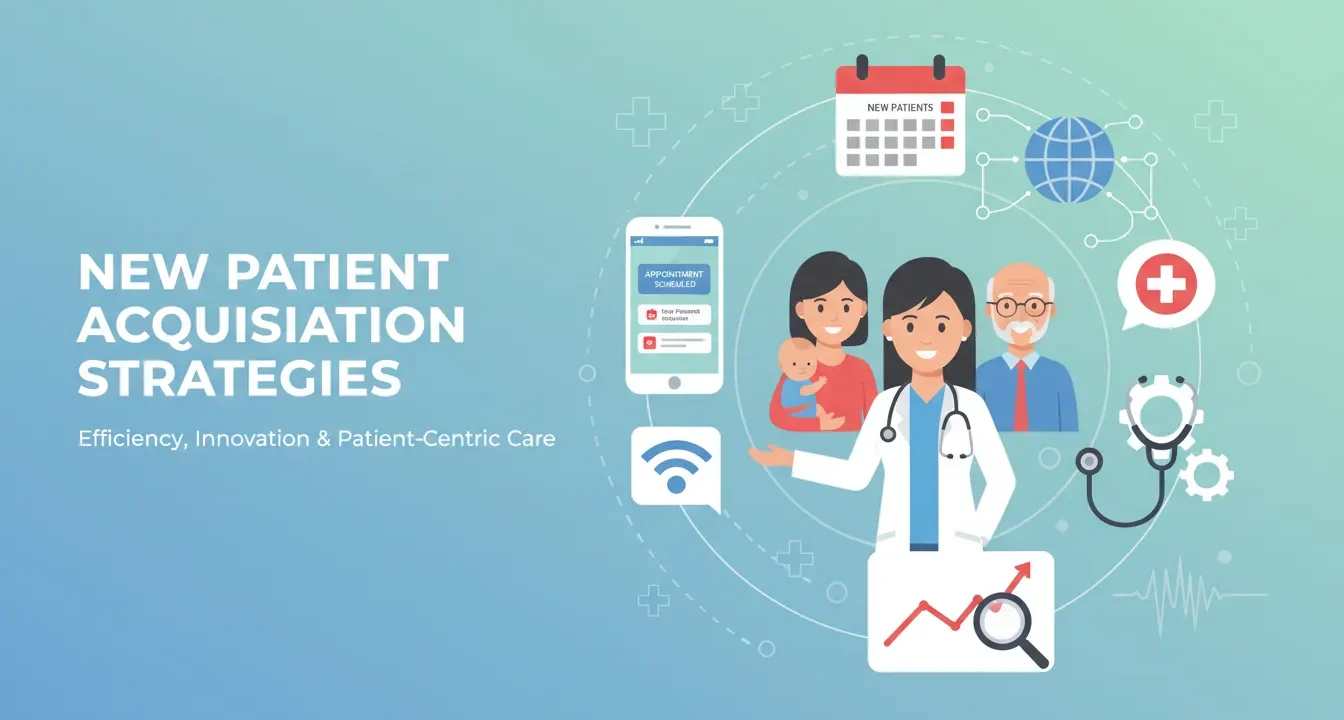
This comprehensive guide explores proven new patient acquisition methods for modern medical practices. You will learn actionable SEO tactics, effective local marketing strategies, and digital advertising frameworks designed to increase weekly appointments, build undeniable practice trust, and drive sustainable long-term clinic growth.
New Patient Acquisition refers to the strategies and processes healthcare providers use to attract and convert new patients into their practice. In today’s competitive healthcare environment, clinics and hospitals must go beyond traditional methods and leverage digital marketing, online reputation management, and patient-centered communication. Techniques such as search engine optimization (SEO), social media marketing, paid advertising, and local listings help increase visibility and reach potential patients actively searching for care. Providing valuable content, maintaining positive reviews, and offering a seamless booking experience also play a key role in building trust. Effective New Patient Acquisition not only increases patient numbers but also supports long-term growth, improves brand reputation, and ensures consistent engagement with the community.
The Blueprint for New Patient Acquisition
Every medical practice wants to grow, but achieving consistent growth requires a structured approach to new patient acquisition. Relying entirely on word-of-mouth referrals is no longer enough. Patients now use search engines, review sites, and social platforms to choose their healthcare providers.
To succeed, clinics must adopt a multi-channel strategy. A successful new patient acquisition plan combines digital visibility, excellent patient experience, and continuous relationship-building. When you prioritize new patient acquisition, you create a reliable pipeline of individuals seeking exactly the care you provide.
Why Traditional Methods Are Failing
Historically, a clinic could place an ad in a local paper and wait for the phone to ring. Today, the healthcare landscape demands more. If your practice lacks an online presence, prospective patients will simply choose a competitor who ranks higher on Google. This is why investing in modern healthcare SEO strategies is mandatory, not optional.
Optimizing Your Digital Presence for New Patient Acquisition
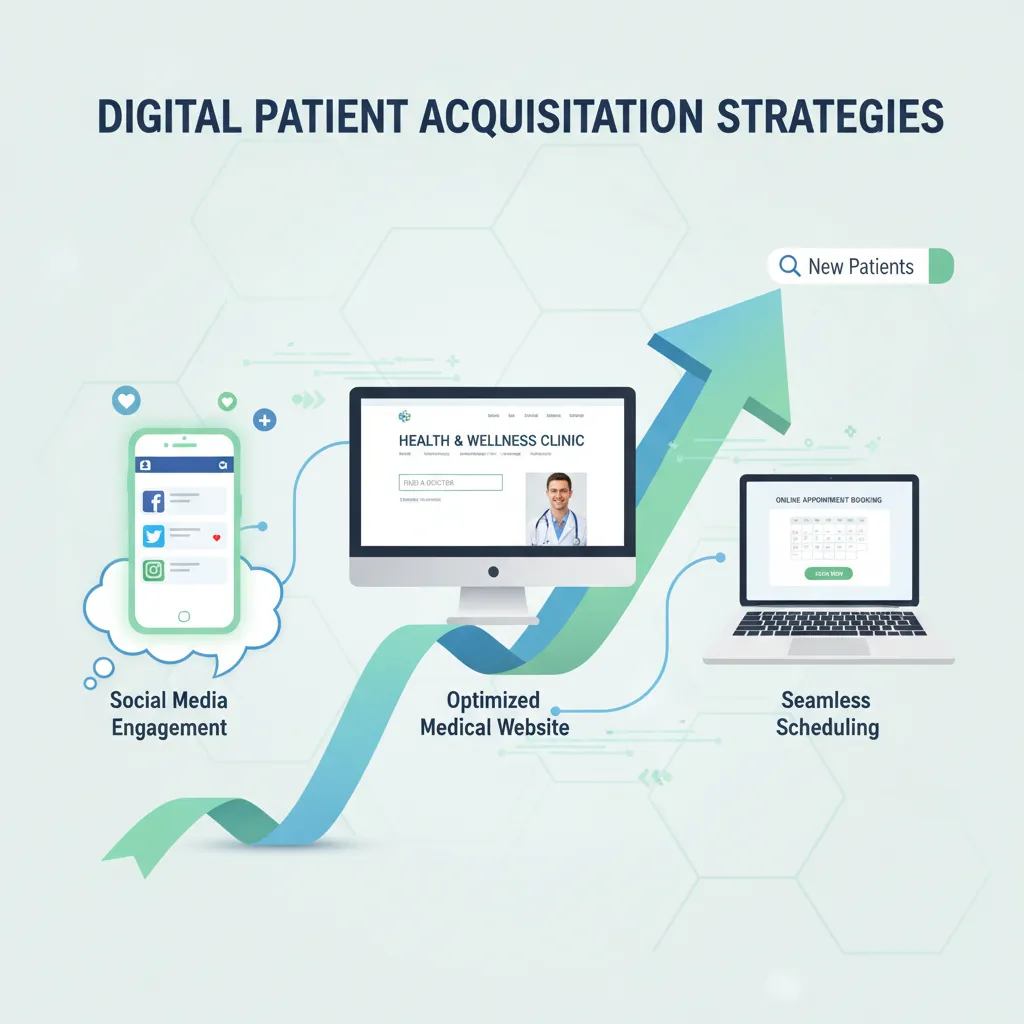
Your website is the digital front door to your practice. If it fails to impress, your new patient acquisition efforts will stall. A high-converting website must be fast, mobile-friendly, and easy to navigate.
Medical Website Design Best Practices
A patient’s journey often begins on a smartphone. Your website must load in under three seconds. It should clearly display your contact information, services, and an online booking option.
- Mobile Responsiveness: Over 60% of health-related searches happen on mobile devices.
- Clear Calls-to-Action (CTAs): Buttons like “Book an Appointment” or “Call Now” should stand out.
- HIPAA Compliance: Ensure all patient forms and data collection methods are secure. For guidelines on compliance, refer to resources provided by the U.S. Department of Health & Human Services (HHS).
Local SEO and Google Business Profiles
Local SEO is the backbone of organic new patient acquisition. When someone searches for a “cardiologist near me,” you want your clinic at the top of the map pack.
Claim and optimize your Google Business Profile. Fill out every section, including hours of operation, services, and high-quality photos of your clinic. Encourage satisfied patients to leave reviews, as star ratings significantly impact a prospective patient’s decision-making process. Regularly posting updates to your Google Business Profile also signals to search engines that your practice is active and relevant.
Content Marketing: Establishing Medical Authority
Content marketing is a powerful engine for new patient acquisition. By publishing helpful, medically accurate information, you build trust before a patient even walks through your doors.
Blogging to Answer Patient Questions
Think about the questions your patients ask every day. Write blog posts answering these questions. If you are a dentist, a post about “How to Manage Tooth Pain Before Your Appointment” captures people experiencing an urgent problem.
- Use simple, jargon-free language.
- Format posts with short paragraphs and bullet points.
- Always include a gentle nudge to schedule a consultation.
By naturally integrating patient education resources, your website becomes a hub of trusted information, directly boosting new patient acquisition.
Video content and Virtual tours

Video marketing heavily influences new patient acquisition. Create brief videos introducing your doctors, explaining common procedures, or offering virtual tours of your facility. Video content breaks down the intimidation factor often associated with medical visits, making people more comfortable choosing your practice.
Paid Advertising to Accelerate New Patient Acquisition
While organic strategies build long-term authority, paid advertising delivers immediate results. For rapid new patient acquisition, combining Google Ads with social media advertising is highly effective.
Google Ads (Search Engine Marketing)
Google Ads allow you to bid on specific search terms. If someone searches for “pediatrician accepting new patients,” your ad can appear at the exact moment they need care.
Focus on high-intent keywords. Structure your campaigns by service line. Ensure that your ads lead to dedicated landing pages rather than your homepage. A dedicated landing page tailored to the specific ad increases conversion rates and lowers your cost per acquisition.
Social Media Advertising
Platforms like Facebook and Instagram offer excellent targeting capabilities. You can target users based on location, age, and interests. Social media ads are particularly useful for promoting elective procedures, wellness programs, and seasonal healthcare campaigns (like flu shots).
Comparison of Acquisition Channels
|
Channel |
Cost |
Time to See Results |
Best Used For |
|---|---|---|---|
|
Local SEO |
Medium |
3-6 Months |
Long-term visibility, local trust |
|
Google Ads |
High |
Immediate |
High-intent, urgent medical services |
|
Content Marketing |
Low-Medium |
6-12 Months |
Building authority, educating patients |
|
Social Media Ads |
Medium |
Immediate |
Elective procedures, brand awareness |
Enhancing the Patient Experience for Better Conversion
Driving traffic to your website is only half the battle of new patient acquisition. Converting that traffic into booked appointments requires a frictionless experience.
Streamlined Booking Systems
If a patient has to wait on hold for ten minutes to book an appointment, they will hang up and call a competitor. Implement online scheduling. Giving patients the power to book their own appointments 24/7 drastically improves new patient acquisition rates.
The Role of Telehealth
Integrating telehealth marketing into your strategy opens your practice to individuals with mobility issues or tight schedules. Promote your virtual care options prominently. Telehealth has shifted from a pandemic necessity to a permanent patient expectation.
Common Mistakes to Avoid
Many practices struggle with new patient acquisition because they fall into predictable traps.
- Ignoring Online Reviews: A single unaddressed negative review can cost you dozens of patients. Always respond professionally to both positive and negative feedback.
- Lack of Follow-Up: If a potential patient submits an inquiry online, they expect a rapid response. Delaying your reply significantly reduces the chance of converting them.
- Inconsistent Branding: Your website, social media, and in-office materials should look and sound cohesive.
- Neglecting Mobile Users: A clunky mobile website instantly drives prospects away.
Expert Insights and Pro Tips
To master new patient acquisition, healthcare marketers must look beyond the basics.
- Pro Tip 1: Implement call tracking. Knowing which marketing channels generate actual phone calls allows you to allocate your budget effectively.
- Pro Tip 2: Focus on patient retention techniques simultaneously. It costs significantly less to retain an existing patient than to acquire a new one. A strong retention strategy fuels word-of-mouth acquisition.
- Pro Tip 3: Leverage schema markup on your website. Adding healthcare-specific schema code helps search engines understand your medical specialties, directly improving your local search rankings.
Tracking and Analytics: Measuring Success

You cannot improve what you do not measure. A successful new patient acquisition strategy relies on data.
Set up Google Analytics to track website traffic, bounce rates, and conversion paths. Monitor your cost per lead (CPL) and patient lifetime value (PLV). Understanding these metrics ensures your new patient acquisition campaigns remain profitable. Regularly audit your digital presence using tools like Google Search Console to identify indexing issues and monitor keyword performance.
By analyzing the data, you can quickly pivot away from underperforming strategies and double down on the channels driving the most valuable appointments.
Conclusion
Scaling your medical practice requires a dedicated, data-driven approach to new patient acquisition. By leveraging local SEO, targeted digital advertising, and a seamless booking experience, you guarantee sustainable growth. Ready to transform your clinic’s reach? Start implementing these proven new patient acquisition strategies today to consistently fill your calendar and serve your community better.
Frequently Asked Questions
1. What is new patient acquisition in healthcare?
New patient acquisition refers to the specific marketing, sales, and operational strategies a medical practice uses to attract, engage, and convert individuals into booked, paying patients for the first time.
2. How much should a clinic spend on new patient acquisition?
A general rule of thumb is to allocate 7% to 10% of your gross revenue to marketing. However, your specific budget for new patient acquisition depends on your growth goals, local competition, and the specific medical services you offer.
3. What is the most effective channel for new patient acquisition?
For most healthcare providers, Local SEO (specifically Google Business Profile optimization) combined with highly targeted Google Ads yields the highest return on investment for new patient acquisition, as they capture high-intent users actively seeking care.
4. How does local SEO impact new patient acquisition?
Local SEO ensures your practice appears in the “map pack” and top organic search results when nearby users search for medical services. High local visibility is crucial, as most patients prefer healthcare providers within a short driving distance.
5. Why is patient retention just as important as new patient acquisition?
Acquiring a new patient costs considerably more than keeping an existing one. High patient retention maximizes the lifetime value of your acquisition efforts and organically fuels further growth through word-of-mouth referrals.
6. How long does it take to see results from an acquisition strategy?
Paid advertising strategies like Google Ads can drive new patient acquisition within days. Conversely, organic strategies like content marketing and SEO typically take three to six months to generate substantial, consistent patient volume.
7. Can social media drive new patient acquisition?
Yes. Platforms like Facebook and Instagram are excellent for building community trust, educating patients, and promoting specific services through targeted advertising, all of which contribute directly to new patient acquisition.
8. What are common mistakes in medical patient acquisition?
Common mistakes include having a slow or non-mobile-friendly website, ignoring online reviews, lacking online scheduling options, and failing to track which marketing campaigns are actually generating appointments.
9. How do online reviews affect new patient acquisition?
Online reviews act as modern word-of-mouth. Over 70% of patients read online reviews before selecting a new doctor. Positive reviews build instant trust and significantly increase new patient acquisition rates.
10. What role does telehealth play in acquiring patients?
Telehealth expands your geographical reach and appeals to busy professionals or those with limited mobility. Highlighting convenient virtual care options is a powerful differentiator that directly boosts new patient acquisition.


I’m a digital marketing expert passionate about transforming how telehealth brands connect with patients online. At Telehealth Marketing Tips, I write about the intersection of healthcare and digital strategy — from SEO and social media to patient engagement and brand growth. My goal is to help telehealth professionals thrive in the digital age with smart, data-driven marketing insights.













No Comments