


This comprehensive guide explores proven strategies to attract and retain new patients. We cover local SEO optimization, digital advertising, patient experience enhancements, and referral programs. You will learn actionable steps to boost your online visibility and drive sustainable growth for your medical clinic.
Growing your healthcare practice requires more than just providing excellent care. Effective patient acquisition marketing connects you with the people who need your medical services while building lasting trust. Patient Acquisition Marketing is a vital strategy for healthcare providers aiming to attract and retain new patients in today’s competitive digital landscape. It involves using targeted online and offline marketing techniques to reach potential patients, build trust, and guide them toward choosing your services. From search engine optimization (SEO) and social media campaigns to paid advertising and content marketing, Patient Acquisition Marketing focuses on creating meaningful connections with the right audience.
Healthcare organizations are increasingly relying on data-driven insights to understand patient behavior and preferences. By optimizing websites, improving online reviews, and offering valuable health-related content, providers can enhance visibility and credibility. Additionally, personalized communication and seamless appointment booking systems play a crucial role in converting leads into loyal patients.
What Drives Modern Healthcare Growth?
The healthcare landscape has shifted dramatically. Patients no longer rely solely on word-of-mouth referrals from their primary care physicians. Instead, they act like modern consumers. They research symptoms online, read provider reviews, compare treatment options, and expect seamless digital experiences. To capture this audience, clinics must implement robust strategies that meet patients exactly where they are searching.
Understanding the unique journey a person takes before booking a medical appointment is critical. This journey usually begins with symptom awareness, transitions into research, moves to evaluating specific providers, and finally ends with scheduling a visit. If your practice does not appear during the research and evaluation phases, you lose potential patients to competitors who have invested heavily in digital visibility.
Building a sustainable growth engine means aligning your messaging, your digital presence, and your internal operations to support a flawless patient journey.
Core Strategies to Attract New Patients
To build a thriving practice, you need a multi-channel approach. Relying on a single source of traffic is risky. By diversifying your efforts, you create a steady pipeline of new appointments.
Optimize for Local Medical SEO
Search engine optimization is the foundation of any successful digital strategy. When someone experiences a health issue, their first instinct is to consult a search engine. Local SEO ensures your practice appears when potential patients search for services in your specific geographic area.
Start by claiming and fully optimizing your Google Business Profile. Ensure your clinic’s name, address, and phone number are perfectly consistent across all online directories. Add high-quality photos of your waiting room, your staff, and the exterior of your building. This builds immediate familiarity and trust.
Incorporate location-based keywords into your website content. If you operate a dental clinic in Chicago, ensure your site prominently features phrases that local residents are actually typing into search engines. However, always prioritize natural language. Search algorithms are incredibly sophisticated and penalize forced keyword usage. For more comprehensive insights, review our guide on healthcare SEO strategies.
Launch Targeted Digital Advertising Campaigns
While SEO builds long-term organic visibility, paid advertising delivers immediate results. Pay-Per-Click (PPC) campaigns allow you to place your practice at the very top of search engine results pages for high-intent keywords.
When a user searches for “urgent care near me open now,” they are ready to act. Bidding on these transactional phrases ensures you capture high-converting traffic. Google Ads is highly effective for this, but it requires careful management. You must use negative keywords to filter out irrelevant searches and ensure your budget is spent efficiently.
Social media advertising offers another powerful avenue. Platforms like Facebook and Instagram allow you to target users based on demographics, interests, and behaviors. This is particularly effective for elective procedures, wellness programs, and specialized treatments. Always ensure your advertising complies strictly with HIPAA regulations to protect consumer privacy.
Build a High-Converting Healthcare Website
Your website serves as your digital front door. If it is outdated, slow, or difficult to navigate, prospective patients will simply leave and find another provider. A high-converting website must be fast, secure, and mobile-friendly.
Most health-related searches now occur on mobile devices. If a user cannot easily tap to call your clinic or book an appointment from their smartphone, you will lose them. Implement clear, compelling calls-to-action on every page. Use contrasting colors for your booking buttons so they stand out naturally.
Security is non-negotiable. Ensure your site uses SSL encryption. Not only does this protect sensitive data submitted through contact forms, but search engines also use site security as a primary ranking factor. Consider upgrading your medical website design to meet modern performance standards.
Content and Community Engagement

Establishing authority is a vital component of medical marketing. Patients need to trust your expertise before they let you manage their health.
Develop Authority-Driven Content
Blogging is an excellent way to answer the questions your community is asking. Create detailed articles about common conditions you treat, preventive care tips, and what patients can expect during specific procedures. This educational approach positions your physicians as thought leaders.
Use a mix of formats to keep your audience engaged. Written articles are great for SEO, but videos are highly effective for building a personal connection. A short video of a doctor explaining a complex procedure in simple terms can dramatically reduce patient anxiety and increase booking rates.
|
Content Type |
Best Used For |
Primary Benefit |
|---|---|---|
|
Blog Posts |
Answering common medical questions |
Boosts organic search traffic |
|
Video FAQs |
Introducing staff and explaining procedures |
Builds trust and humanizes the practice |
|
Infographics |
Explaining health statistics or timelines |
Highly shareable on social media |
|
Case Studies |
Highlighting successful complex treatments |
Demonstrates specialized expertise |
Leverage Social Media for Healthcare
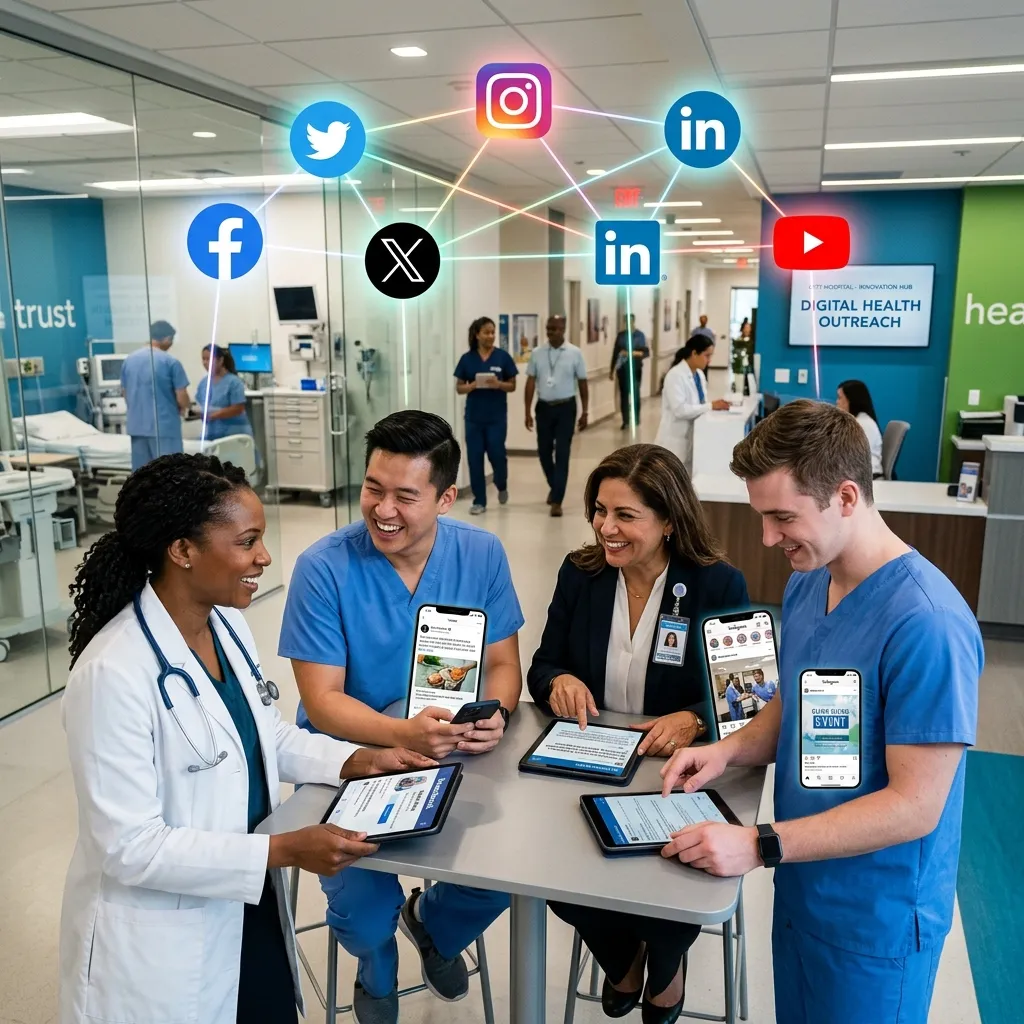
Social media platforms are ideal for humanizing your practice. Share behind-the-scenes glimpses of your team, celebrate work anniversaries, and highlight community involvement. When patients see the people behind the scrubs, they feel more comfortable choosing your clinic.
Avoid overly clinical or dry posts. Instead, focus on wellness, prevention, and community health. Host live Q&A sessions where followers can ask general health questions. This fosters a sense of community and keeps your practice top-of-mind.
Enhancing the Patient Experience for Retention
Acquiring a new patient is only half the battle. Retaining them ensures long-term profitability and generates organic word-of-mouth referrals.
Implement AI and Telehealth Solutions

Modern consumers value convenience above almost everything else. Offering telehealth appointments for initial consultations or follow-up visits caters to busy schedules and increases patient satisfaction.
Artificial intelligence is also transforming how clinics operate. AI-powered chatbots can answer basic questions, guide users to patient portals, and even assist with scheduling during off-hours. This reduces the burden on your front desk staff and provides instant gratification for the user.
Streamline Appointment Scheduling
The scheduling process must be frictionless. If a patient has to wait on hold for ten minutes just to book a slot, they will likely hang up. Implement an online scheduling system that integrates directly with your practice management software. Allow patients to see available times and book instantly without picking up the phone.
Send automated SMS and email reminders to reduce no-show rates. A simple text message 24 hours before the appointment keeps your schedule full and respects everyone’s time. Check out our detailed resources on patient retention techniques to optimize this workflow.
Pro Tips for Experience Management
- Send personalized welcome emails prior to the first visit.
- Provide digital intake forms so patients can complete paperwork at home.
- Follow up with a text message after the appointment checking on their recovery.
Referral Programs and Strategic Partnerships
Word-of-mouth remains incredibly powerful. Building structured referral programs can supercharge your growth.
Create a system that naturally encourages satisfied patients to leave online reviews and recommend friends. While you cannot incentivize medical reviews due to ethical guidelines, you can simply ask for them. A polite automated email thanking the patient for their visit and providing a direct link to your Google review page works wonders.
Furthermore, build relationships with other local healthcare providers. A primary care physician needs trusted specialists to send their patients to. Take the time to network with local doctors, physical therapists, and wellness centers. Mutual referral networks are cost-effective and yield high-quality leads.
Common Mistakes to Avoid in Healthcare Marketing
Even well-funded campaigns can fail if they fall into common traps. Avoid these frequent missteps:
- Ignoring Mobile Users: Designing only for desktop computers alienates the majority of your audience.
- Using Complex Medical Jargon: Speak in terms your patients understand. Save the clinical terminology for peer-to-peer discussions.
- Neglecting Online Reviews: Failing to monitor and respond to feedback makes your practice look uncaring. Always address negative reviews professionally and promptly.
- Violating Privacy Laws: Never use patient names or specific case details in marketing without explicit, documented consent. Adhere strictly to the guidelines set by the American Medical Association.
- Inconsistent Branding: Your website, social media, and physical office should all look and feel like the same cohesive brand.
Measuring Your Return on Investment (ROI)
You cannot improve what you do not measure. Tracking the performance of your campaigns is essential to ensure you are spending your budget wisely.
Set up conversion tracking in Google Analytics to monitor how many website visitors actually fill out a contact form or click your phone number. Calculate your patient acquisition cost by dividing your total marketing spend by the number of new patients generated in that same period.
If your cost to acquire a patient is higher than their lifetime value to your clinic, your strategy needs immediate adjustment. Regularly review your data, test new messaging, and optimize your approach based on what the numbers tell you.
Conclusion
Mastering patient acquisition marketing is essential for sustainable practice growth. By combining robust local SEO, targeted digital advertising, and a seamless patient experience, you can attract and retain loyal patients. Start optimizing your digital presence today and watch your healthcare practice thrive. Contact our expert team to begin building your custom growth strategy.
FAQs
1. What is the average cost to acquire a new patient?
The cost varies heavily by medical specialty, location, and competition. General practices might spend $50 to $100 per patient, while highly specialized surgeons or cosmetic dentists might spend upwards of $300 to $500. The key is ensuring the lifetime value of the patient far exceeds this initial acquisition cost.
2. How does local SEO help medical practices?
Local SEO ensures your practice shows up in the “Local Pack” (the map section) on Google when people search for nearby medical services. This drives highly qualified, ready-to-book local traffic directly to your website or phone line.
3. Why are online reviews important for doctors?
Most consumers read online reviews before selecting a new healthcare provider. Positive reviews build instant trust and social proof, while a lack of reviews or unaddressed negative feedback will drive prospects to your competitors.
4. Can social media actually drive patient bookings?
Yes. While social media is primarily a brand awareness tool, targeted ads and engaging educational content can build enough trust to prompt a user to click through to your website and schedule an appointment.
5. How do you calculate marketing ROI in healthcare?
Calculate ROI by subtracting your total marketing investment from the revenue generated by new patients, then dividing that number by the marketing investment. Multiply by 100 to get your ROI percentage.
6. What makes a healthcare website high-converting?
A high-converting website is mobile-responsive, loads in under three seconds, features clear calls-to-action, offers online scheduling, displays social proof (reviews), and is easy to navigate.
7. How does patient retention affect acquisition?
High retention lowers your overall marketing burden. It is significantly cheaper to keep an existing patient than to acquire a new one. Furthermore, retained patients become brand advocates who refer friends and family, driving organic acquisition.
8. What are the best paid advertising channels for clinics?
Google Ads is generally the best for capturing high-intent searches (people actively looking for a doctor). Facebook and Instagram ads are excellent for building awareness and promoting elective or wellness-based services.
9. How can automation improve the patient journey?
Automation handles repetitive tasks like sending appointment reminders, distributing intake forms, and requesting post-visit reviews. This creates a smooth experience for the patient and frees up your staff to focus on in-person care.
10. Is content marketing worth the investment for specialists?
Absolutely. Specialists handle complex conditions that patients frequently research extensively before seeking treatment. By providing comprehensive, authoritative content, specialists capture these searching patients early in their journey and establish vital trust.


I’m a digital marketing expert passionate about transforming how telehealth brands connect with patients online. At Telehealth Marketing Tips, I write about the intersection of healthcare and digital strategy — from SEO and social media to patient engagement and brand growth. My goal is to help telehealth professionals thrive in the digital age with smart, data-driven marketing insights.











No Comments